Oral Presentation Crystal36-AXAA Conference 2026
Quantitative Phase Analysis without crystal structure - Molecular Scattering Power method (143247)
Rietveld Quantitative Phase Analysis (QPA) relies on the crystal structure of a certain phase to determine its weigh proportions in a mixture. Different crystal structural models or structural parameters may result in different QPA results; crystalline or disordered phases without known or accurate crystal structure may not be analysed using Rietveld QPA method.
For the purpose of QPA, and to avoid the detailed structural modelling, several structureless QPA methods, including PONKCS method [1] and DDM [2] have been developed. The former based on experimental calibration of the ZM factor in a PONKCS model, and the latter assumes the phase scattering power can be represented by the sum of squared electron numbers of composition atoms.
This presentation elaborates the base of Molecular Scattering Power (MSP) method [3], which is a QPA method based only on the chemical composition of a certain phase or a mixture, easily obtainable from elemental analyses e.g. XRF or ICP characterisations etc. The MSP theory (Figure 1) is elaborated from the basic XRD intensity equation in Bragg-Brentano geometry, and is highlighted with its linkages to the conventional Rietveld QPA method, External Standard Method, and the previously reported DDM (Direct Direivative Method).
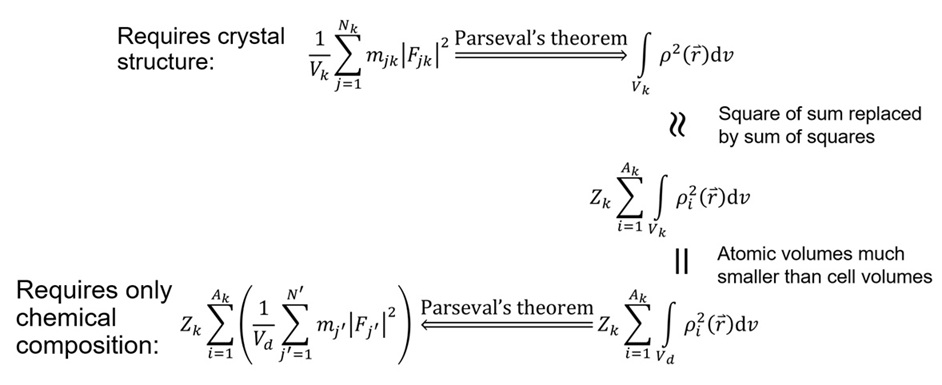
Figure 1. Core theory base of Molecular Scattering Power method
References:
[1] Scarlett, N. V. Y. & Madsen, I. C. (2006). Powder Diffr. 21, 278–284.
[2] Toraya, H. (2016). J. Appl. Crystallogr. 49, 1508-1516.
[3] Wang, X. & Spratt, H. (2025). J. Appl. Crystallogr. 58, 1159–1173.